Demo
B2B MARKETPLACE PLATFORM

B2B Marketplace Platform: Composable Commerce Gives You the Building Blocks. ACE Runs Your Marketplace Autonomously.

The Emporix B2B marketplace platform connects manufacturers, distributors and channel partners in one system. Approvals, commissions and quotes run on automation instead of manual upkeep. As a Commerce Value Stream inside ACE, your marketplace is built for AI purchasing agents from day one.
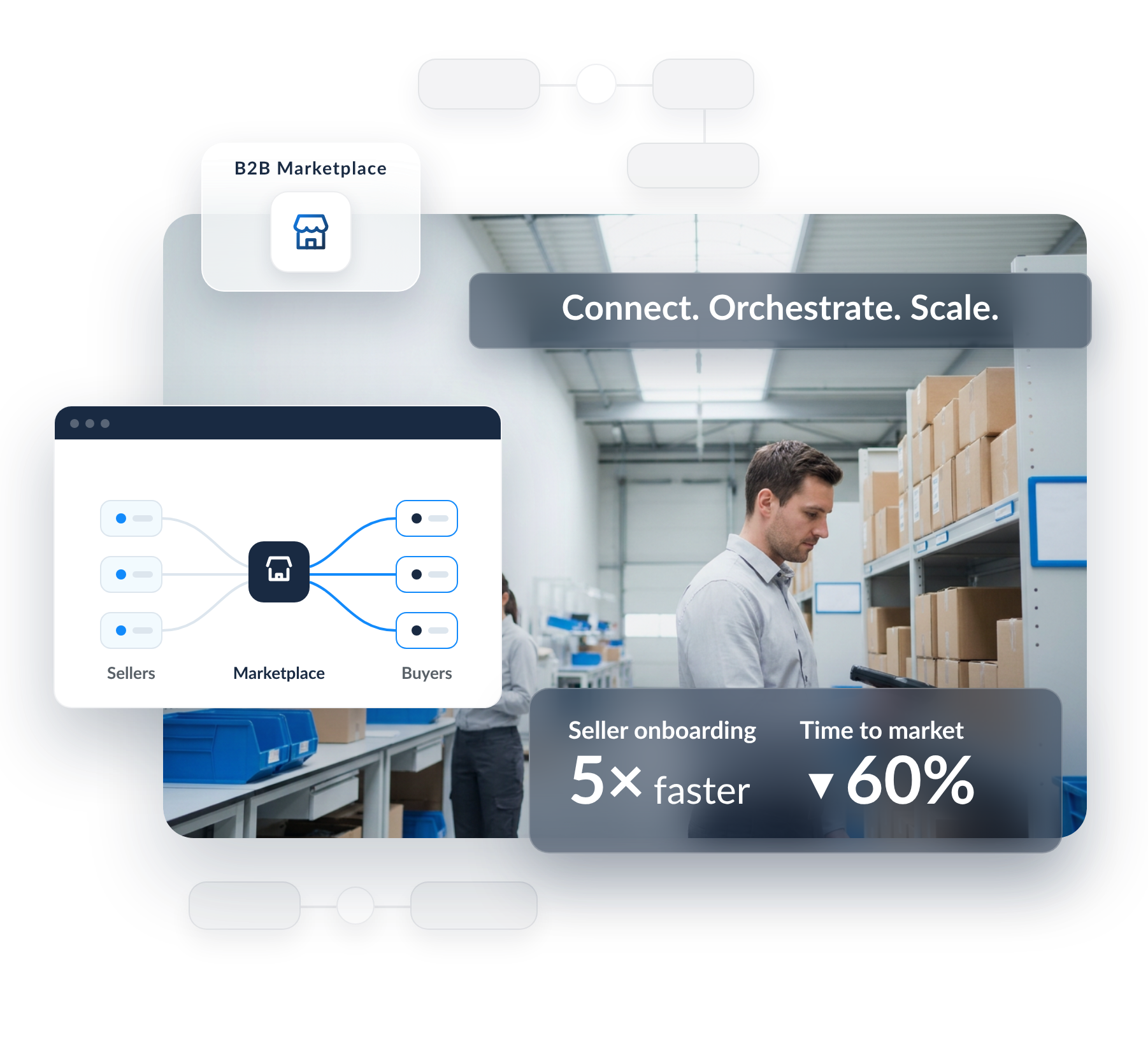
B2B Marketplace Platform
90%
of B2B purchases will run through AI agents by 2028 according to Gartner, moving more than $15 trillion in spend
Source: Gartner, 2028 forecast
20%
of B2B sellers will be pushed into AI agent led quote negotiations in 2026, according to Forrester
Source: Forrester, 2026 forecast
71%
of B2B companies already offer e-commerce according to McKinsey, with about a third of revenue running through digital channels
Source: McKinsey B2B Pulse Survey

Two Ways to Run a B2B Marketplace.

A Classic Marketplace Tool
A standalone system next to your core shop
Vendor onboarding handled manually
Approvals and pricing kept separate from your B2B business
Not built with AI purchasing agents in mind
Marketplace as a Value Stream in ACE
One data model for shop, sales and marketplace
Vendor onboarding guided and reviewed
Pricing, access and order splitting in the same system
Agent ready from the start

Core Capabilities

Vendor as Its Own Legal Entity
Name, legal name, tax registration number and country of registration, including subsidiaries and multiple locations. Activation stays with the operator.
Vendor Owned Product Catalog
Each vendor manages its own products, media and availability, in the same system as your core assortment.
Vendor Owned Pricing
Vendors maintain their own base prices. Commercial rules and terms stay with the operator.
Four User Groups per Vendor
Created automatically for every new vendor: product manager, product viewer, order manager, order viewer.
Automatic Split by Vendor
An order spanning several vendors is split into suborders automatically, each vendor sees only its own part.
Central Operator Control
Manage company data, subsidiaries, locations and contacts per vendor centrally.
DIFFERENTIATION

Your Marketplace Is Agent Ready Because ACE Is.

AI purchasing agents compare offers, send requests and increasingly negotiate on their own. Your marketplace does not need to be built for that separately, it runs on the same API first architecture as the rest of your business.

One Product Data Model, Not an Island
Vendor products run in the same data model as your core assortment.
API Driven Offers
Prices and availability available in real time, not only visible in the storefront.
Existing Governance Still Applies
Vendor status, user groups and approvals apply regardless of who or what places the order.

Use Cases by Industry

Manufacturing
Manufacturers
Direct and partner sales in one system, without channel conflicts.
Wholesale / Distribution
Wholesale and Distribution
Core assortment and marketplace offer in one platform.
Financial Services
Insurance and Financial Services
Sales partners sell subscription services directly, as in the VHV reference project.

Architecture Compared

CriteriaSaaS Marketplace SpecialistEmporix ACE Platform
ArchitectureStandalone, often licensed separatelyValue Stream inside your existing platform
Agent ReadinessTypically not built inNatively built for AI purchasing agents
IntegrationExtra interface to your core shopOne data model for shop and marketplace
Time to ValueDepends on vendor, often longer rolloutCan build on an existing ACE instance

From the Field

VHV
5
months to go live
VHV Insurance: "meinMaklerStore"

Through digitalbroking.de, a VHV subsidiary, Emporix built this service marketplace together with implementation partner Adesso, live since 2025.

Go live in only 5 months
Vendors sell subscription services directly
Orders routed to the right vendor automatically
All vendor data and contracts in one place

Frequently Asked Questions

What is a B2B marketplace?

A platform where multiple vendors sell to business buyers together, sharing payment, approval and onboarding processes.

How does a B2B marketplace work?

Vendors manage their own catalogs, the operator handles approvals, commissions and buyer access centrally.

What is the difference between a marketplace and an ecommerce platform?

An ecommerce platform sells one company's products. A marketplace brings several vendors into one purchasing flow.

How much does it cost to build a B2B marketplace?

It depends on vendor count, existing systems and desired automation. We size it against your actual vendor mix.

What features does a B2B marketplace platform need?

Vendor onboarding, catalog and PIM per vendor, approval workflows, split payments or a commission engine, quote to order, and customer hierarchies.

Ready to Run Your B2B Marketplace Autonomously?

Request a Demo