Your Commerce
Operations Have
Broken Points.
Find Them
in 30 Minutes.
Before you book a demo, we help you identify exactly where your value streams break — and whether automation can fix them. One focused session. A clear decision at the end.
30 minutes No demo commitment Response within 1 business day




The Demo That Answered the Wrong Questions
You've been here before. 90 minutes. Features you didn't ask about. The workflow you needed to evaluate — skipped. Weeks later, your team still couldn't agree on which problem the platform was supposed to solve.
The Demo That Misses the Point
You enter with a vague brief. The vendor shows what the platform does. You leave knowing what the product has, not whether it fits your process.
The Implementation That Solved Nothing
The technical integration works. But the operational problem that triggered the project is still there — running on newer infrastructure.
The Decision That Dragged On
Six months in, the steering committee still can't agree on requirements — because nobody mapped the current process clearly enough to know what "good" looks like.
A Diagnostic, Not a Demo
The Autonomous Commerce Lab is a 30-minute structured session run by Emporix commerce architects. It is not a sales meeting. It examines one or two of your highest-priority commerce value streams — and surfaces exactly where they break.
Clarity before features.
Every time.
By the end of 30 minutes, you know whether automation can address your specific problem — and whether a tailored demo or PoC is the right next step. If it isn't, we say so directly.
5 min
Align on what matters most
We confirm which value stream to examine. You set the scope — not us.
10–15 min
Map the process as it exists today
Handoffs. Manual steps. Delays. Exceptions. We work through your real process — not a hypothetical.
5–8 min
Assess where automation changes the calculus
Pattern-based discussion. No product screens. No feature list. An honest assessment of fit.
5 min
A direct decision
Custom demo or PoC — or not. We say clearly what makes sense. No vague next-step meetings.
What Changes When You Start With a Diagnostic
The Lab doesn't replace the demo. It makes the demo worth having.
| Without the Lab | After the Lab | |
|---|---|---|
| When pre-sales starts | At the demo — before scope, pain, or ownership is confirmed | After alignment — demo becomes confirmation, not exploration |
| What the demo accomplishes | Broad product orientation to an audience without a brief | Targeted demonstration of the specific value stream already diagnosed |
| Time to qualified decision | Months of drifting evaluation with expanding scope | Days to weeks — requirements surfaced before software is shown |
| What your organisation learns | What the platform can do in general | Whether automation addresses the specific process causing the most friction |
You now know what 30 minutes can surface.
The question is whether you want that clarity before your next evaluation step.
What Happens When the Right Problem Gets Solved
These organisations didn't guess which processes needed automation. They started with a clear picture of where their value streams were breaking.

Cycle Time Reduction
Automated purchase order processing and returns management — eliminating the manual handling accumulated over years of incremental workarounds.
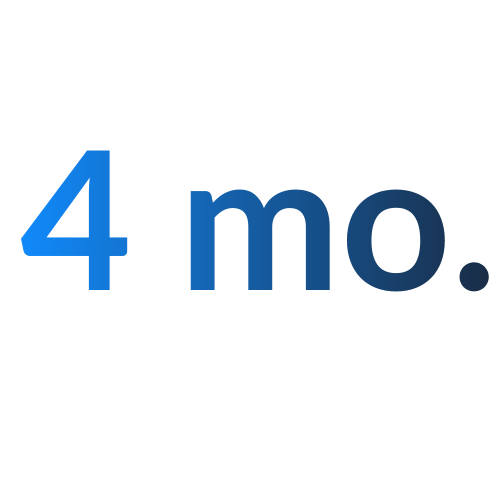
B2B, Reseller & Retail Unified

All three commerce channels on a single platform in under four months — because the target state was designed before implementation began.
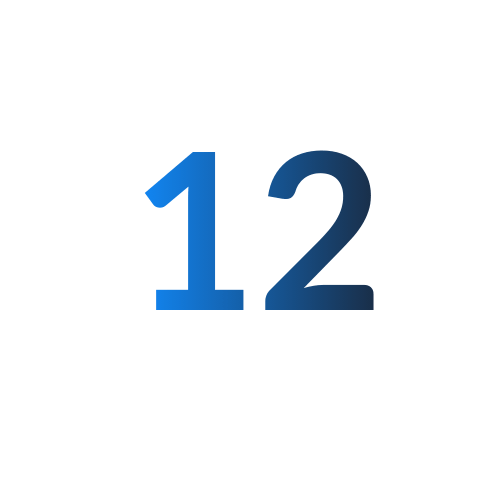
Countries Automated
Consistent pricing, ordering, and product orchestration across 12 markets — value stream design completed before a single country went live.
“The session gave us a language for our own process that we didn't have before. When we went into the demo three weeks later, every person in the room already agreed on what we were evaluating and why.”
Head of Digital Commerce
Global B2B Manufacturer
Six Value Streams the Lab Examines
Every session focuses on the one or two streams where your operation is experiencing the most friction right now.
1. Purchase Order Automation
Eliminate manual approval cycles, reduce ERP handoff delays, handle exceptions without human escalation on every edge case.
2. Order Cancellation Reduction
Product substitution logic and exception handling that keeps orders moving when the first-choice item isn't available.
3. B2B Customer Onboarding
Automate account setup, credit checks, catalogue assignment, and approval workflows — without manual coordination at every step.
4. Customer Support Optimisation
AI agent-assisted resolution and cross-team collaboration flows that reduce resolution time without senior staff on every exception.
5. Guided Selling
Storefront AI agents supporting complex B2B buying — catalogue navigation, configuration, pricing — without a salesperson on every enquiry.
6. Sales Portal and CPQ
Configure, price, and quote workflows integrated across ERP and CRM — without manual re-keying or separate system coordination.
Things People Ask Before Requesting a Lab
If I can book a demo directly, why do this first?
A demo shows what the platform does. The Lab identifies what your process can't do — and whether automation addresses that gap. Enterprise buyers who skip the diagnostic tend to spend more time in evaluation, not less, because requirements surface during the demo rather than before it.
This sounds like a discovery call. How is it different?
A discovery call surfaces requirements. The Lab maps process. The same requirement — "faster order processing" — can arise from four different process failures with four different solutions. The Lab identifies which one is actually causing your problem, and ends with a decision — not a follow-up to "align on next steps."
What do your commerce architects bring to the session?
Pattern recognition from running value stream diagnostics across manufacturing, distribution, wholesale, and industrial commerce environments. They've seen the same failure patterns appear across industries — and can assess fit without a product demo in the room.
Who should attend from our side?
The minimum is one person who knows the process well enough to say "yes, that is exactly where it breaks." A technical or integration stakeholder adds significant value. A senior decision-maker, even partially, usually accelerates the outcome.
What preparation is required?
Answering the five questions in the request form is the primary preparation. No additional decks, documentation, or materials required from your side. The Lab extracts what it needs from the conversation.
What happens after the Lab?
Two paths. If the session confirms clear value stream pain and interest in a tailored demo, we agree the next step together. If not, we recommend the appropriate resources. No pipeline is created against your name unless it is warranted.
Ready for Clarity on Your Commerce Operations?
30 minutes. A structured diagnostic. No demo commitment.
